A car can go out of alignment slowly enough that you barely notice the change. The steering wheel may sit a little off-center, the vehicle may drift on a straight road, or one tire may start wearing faster than the others. Other times, the change happens right after a pothole hit or curb impact.
Wheel alignment is about the angles of the wheels relative to the vehicle and the road. Those angles affect how the tires track, how the steering feels, and how evenly the tread wears. When something changes those angles, the car may need more than simply putting air in the tires or rotating them.
Potholes and Curb Hits Can Knock Alignment Out
A hard impact is one of the most common reasons alignment changes suddenly. Hitting a deep pothole, striking a curb, or dropping a wheel into a rough shoulder can move suspension or steering components enough to change wheel angles.
You may notice the steering wheel sits differently afterward or the car pulls more strongly to one side. In some cases, the alignment changes only slightly, so the first clue is uneven tire wear several weeks later.
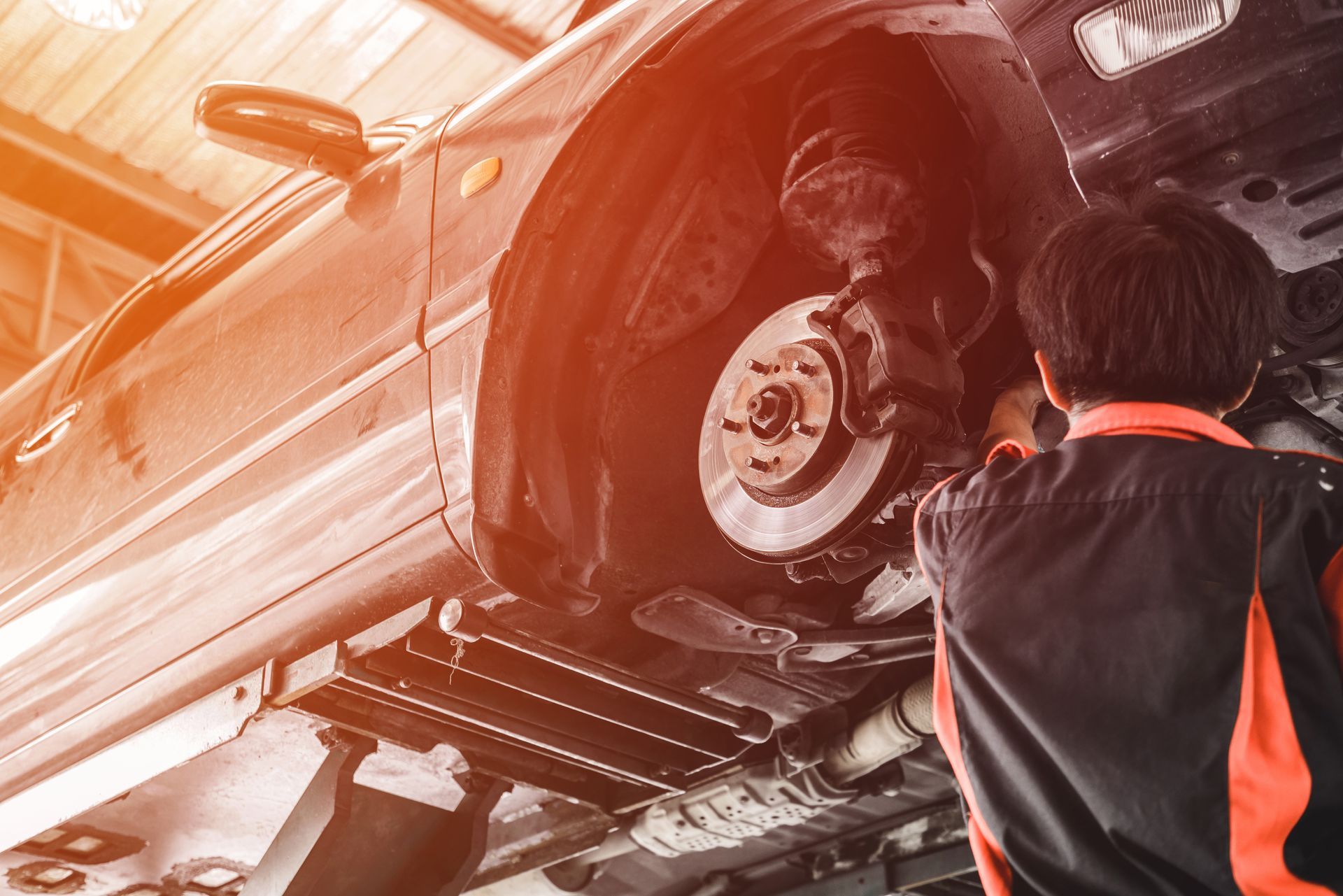
At our shop, we also check for bent parts after a hard impact. An alignment machine can show us the angles are wrong, but adjustments alone will not correct a bent control arm, damaged tie rod, or shifted suspension component.
Worn Suspension Parts Can Change Wheel Position
Bushings, ball joints, tie rods, wheel bearings, and other suspension parts are designed to hold the wheels in a precise position while still allowing the suspension to move.
As those parts wear, the wheel can shift slightly under braking, acceleration, or cornering. The alignment may look different depending on whether the vehicle is sitting still or moving under load.
Some clues that suspension wear may be involved include:
- Uneven tire wear that returns after an alignment
- Clunking over bumps
- Loose or vague steering
- The car changing direction when braking
- A wheel that has noticeable play
- Steering that needs frequent correction on the highway
If we find looseness during an inspection, we need to address that part before setting the final alignment.
Replacing Steering or Suspension Parts Can Require Alignment
Any repair that changes the position of the wheel or steering linkage can affect alignment. Tie rods are a clear example because their length helps determine the front wheels' toe angle.
Control arms, struts, ball joints, steering racks, and certain suspension bushings can also change alignment once replaced. Even if the new part is installed correctly, small manufacturing and mounting differences can alter the final wheel position.
That is why alignment is commonly checked after this type of work. We want the new parts operating with the wheels pointed where the vehicle manufacturer intended.
Springs and Ride Height Affect Alignment Too
Wheel alignment is tied closely to suspension height. If a spring sags, breaks, or is replaced with a different-height component, suspension geometry can change.
Lowering or lifting a vehicle can do the same thing. The new ride height changes the angles of control arms and other suspension pieces, which can alter camber, caster, or toe.
We compare ride height when the alignment readings are far from normal or one side behaves differently from the other. Adjusting around a damaged spring without correcting the height problem can leave the car with poor handling even if some alignment numbers are brought back into range.
Tire Wear Does Not Always Mean Alignment Is the Cause
Uneven tread wear is a strong reason to check alignment, but alignment is not the only cause. Incorrect tire pressure, worn shocks, damaged tires, and loose suspension parts can create similar patterns.
For example, a tire worn heavily through the center is more likely to point toward pressure than wheel angles. Cupped or scalloped tread can send us toward shocks, struts, wheel bearings, or balance problems.
We look at the pattern before making adjustments. An alignment can improve wheel angles, but it cannot repair a tire that is already damaged or correct suspension movement caused by worn parts.
How We Know Whether the Car Actually Needs an Alignment
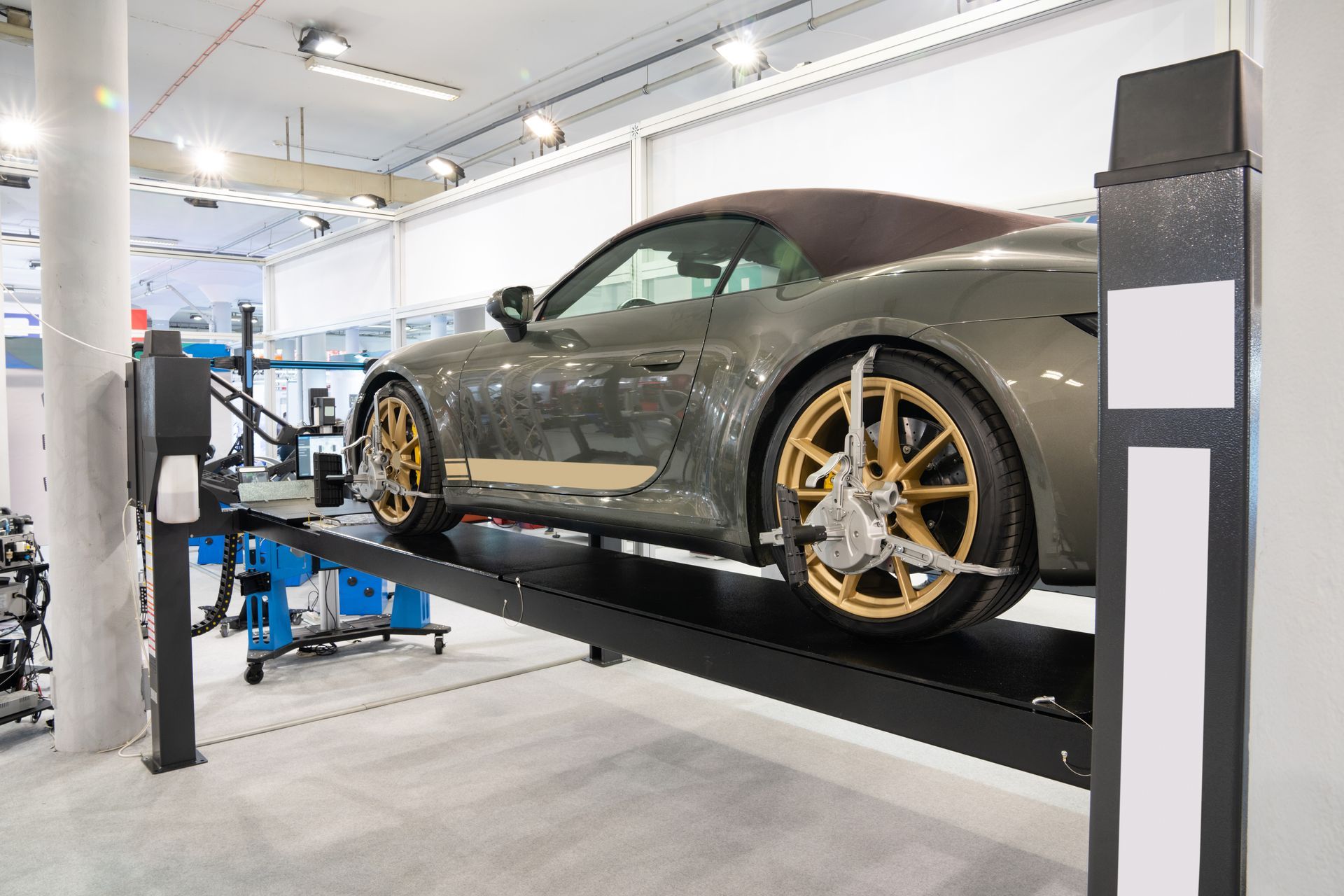
The steering wheel position and tire wear give us clues, but the alignment rack gives us measurements. Sensors or targets on the wheels allow the equipment to compare camber, caster, and toe with the vehicle's specifications.
Toe describes whether the wheels point slightly inward or outward. Camber describes wheel tilt when viewed from the front, while caster relates to the steering axis and how the wheel returns toward center.
Regular maintenance gives us chances to spot abnormal tread wear before a tire is ruined. We do not recommend alignment just because a certain number of miles have passed. We recommend it when measurements, tire wear, recent repairs, or handling symptoms show that the wheel angles need correction.
Get Wheel Alignment Service In Lakewood, CO, With Front Range Auto
If your steering wheel is off-center, the car pulls, or your tires are wearing unevenly, Front Range Auto in Lakewood, CO, can check the alignment and inspect the steering and suspension for anything that may have changed the wheel angles.