If you have ever felt your car drifting slowly toward the shoulder while you are trying to drive straight down a flat road, you have experienced the subtle annoyance of a vehicle out of alignment. It starts as a tiny tug on the steering wheel, but over time, it becomes a constant wrestling match between you and your tires. Many drivers view a wheel alignment as one of those optional services that can be pushed off until next year, but as a shop that sees the long term damage caused by neglect, we want to help you understand why this simple adjustment is so critical.
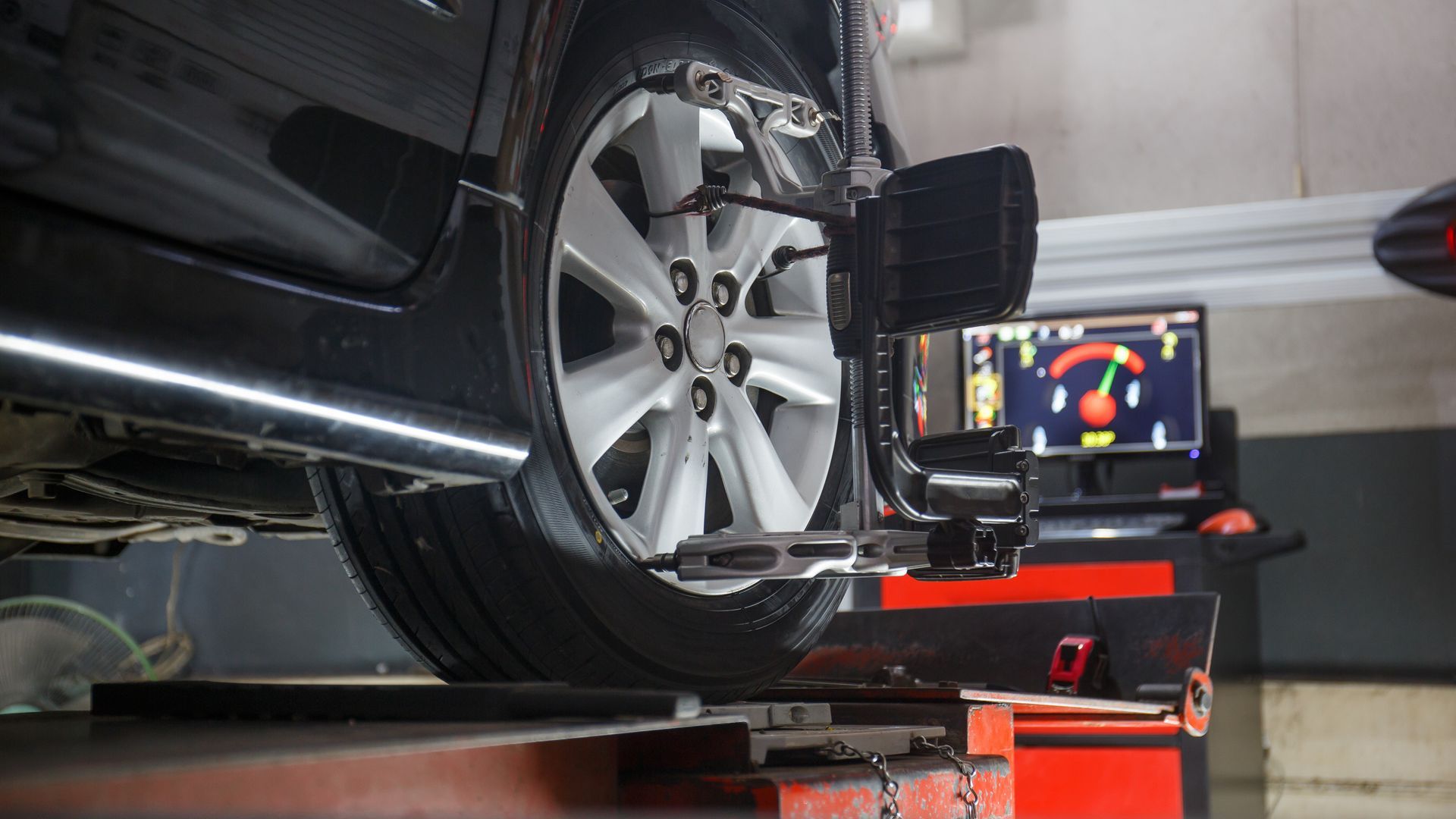
At our shop, we like to think of a wheel alignment as the foundation of your car's handling. When your wheels are perfectly squared up with each other and the road, everything works in harmony. When they are even slightly askew, your car is essentially fighting itself with every rotation of the tires. The question of how often you should get an alignment does not have a single answer that fits every driver, but there are some very clear guidelines that can save you a lot of money and frustration.
The General Rule of Thumb
For the average driver who sticks to paved city streets and well-maintained highways, we usually recommend a professional wheel alignment check once a year or every twelve thousand miles. This roughly aligns with most people's oil change schedules, making it easy to remember. Even if you are a very careful driver, the simple vibrations of daily commuting can slowly cause the bolts and adjustment points in your suspension to shift.
However, your local geography plays a massive role in this timeline. If you live in an area where the winters are harsh and the potholes are deep enough to swallow a hubcap, you might need to see us twice a year. Every time you hit a sharp bump or curb, it delivers a jolt to your steering components that can knock things out of spec.
Red Flags That Mean You Need an Alignment Now
Sometimes you should not wait for your annual checkup. Your car is very good at telling you when its feet are not pointed in the right direction. If you notice any of these signs, you should bring the vehicle in immediately to prevent further damage.
- Uneven Tire Wear: This is the most expensive consequence of a bad alignment. If you look at your tires and see that the inside edge is bald while the outside still has plenty of tread, your alignment is definitely off. You are essentially dragging your tires sideways across the pavement.
- The Steering Wheel is Crooked: When you are driving straight, your steering wheel should be perfectly centered. If the logo in the middle of the wheel is tilted to the left or right while the car is moving in a straight line, your front end is out of sync.
- A Pulling Sensation: If you let go of the wheel for a split second on a flat road and the car immediately dives toward the lane marker, your wheels are fighting each other.
- Squealing Tires: If you hear your tires chirping or squealing when you make a turn at a normal speed, it often means the angle of the tires is causing them to scrub against the road instead of rolling over it.
Why You Should Align When You Buy New Tires
One of the biggest mistakes we see is when a customer invests hundreds or even thousands of dollars in a brand new set of tires but skips the alignment. If your car is out of alignment, it can ruin those expensive new tires in just a few thousand miles. We always suggest getting an alignment at the same time you get new rubber. It ensures that your investment starts off on the right foot and that you get the full life expectancy out of the tread. Think of it as a small insurance policy for your new tires.
The Benefits of Staying Straight
Keeping your wheels aligned is about more than just avoiding a crooked steering wheel. It has a direct impact on your wallet at the gas pump. When your wheels are fighting each other, it creates extra rolling resistance. Your engine has to work harder and burn more fuel just to push the car forward. A properly aligned car rolls much more freely, which can noticeably improve your fuel economy over the course of a year.
Furthermore, a well-aligned car is much safer to drive. In an emergency situation where you have to swerve to avoid an obstacle, a car with a correctly aligned suspension will respond much more predictably. You want all four tires working together to provide maximum grip when it matters most.
Alignments at Front Range Auto
If you cannot remember the last time you had your alignment checked, or if your car has started to feel a bit squirrely on the highway, it is time to come see us at Front Range Auto. We pride ourselves on honest advice and quality workmanship that keeps you moving straight and true.
Give us a call or stop by this week to schedule your alignment.