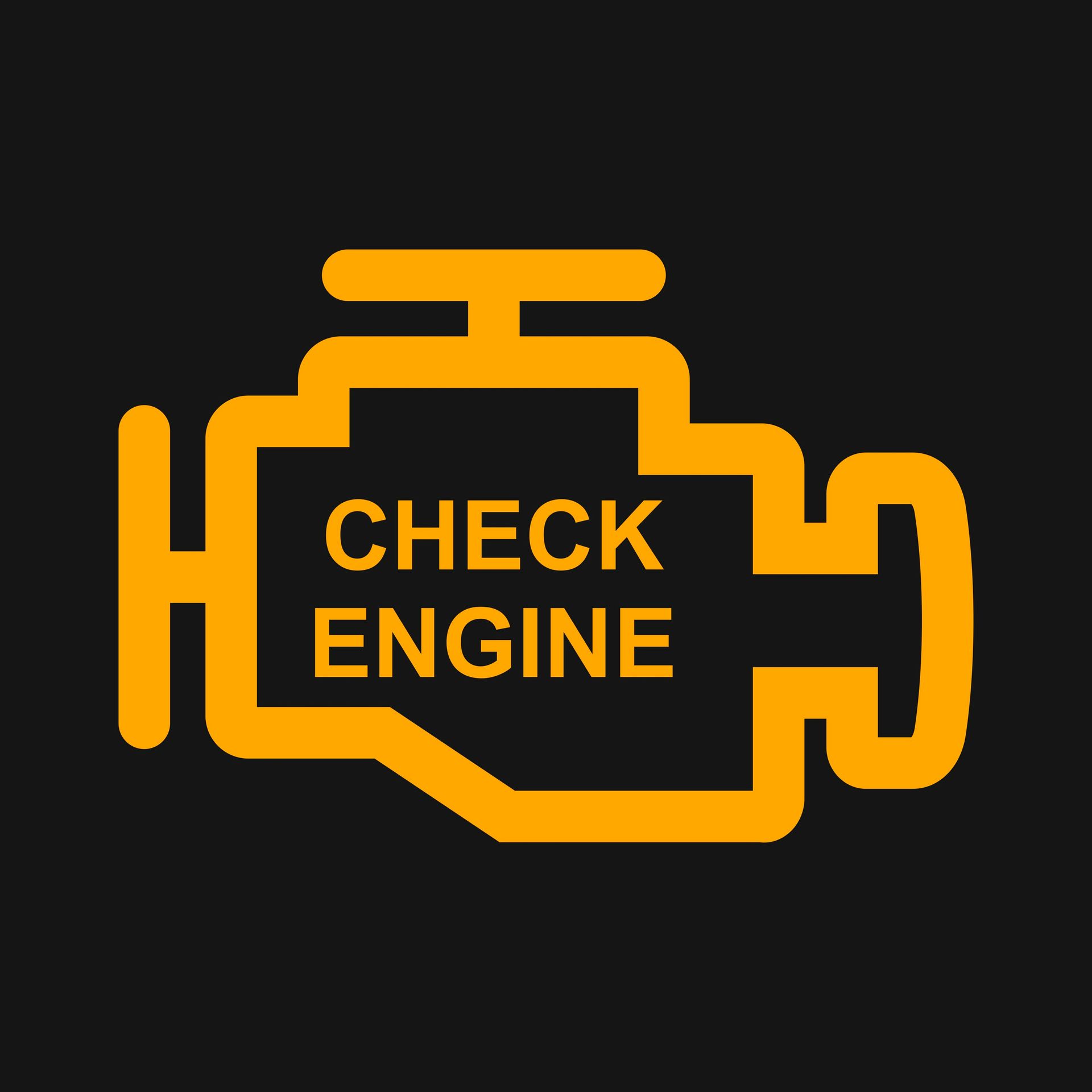
It happens to the best of us. You are driving along, enjoying your favorite song or thinking about what to cook for dinner, when a glowing amber icon suddenly appears on your dashboard. It is the dreaded check engine light. For some, it is a source of immediate panic. For others, it is a nagging annoyance that gets ignored for weeks. At our shop, we see that little light as a direct line of communication from your car's brain to you. It is not necessarily a sign that your car is about to explode, but it is a signal that something in the complex dance of sensors and mechanical parts has stepped out of sync.
The modern engine relies on dozens of tiny monitors to keep everything running efficiently. When the onboard computer detects a reading that falls outside of the normal range, it triggers that light and stores a specific code to tell us where the trouble is. While there are hundreds of possible reasons for that glow, we see a handful of usual suspects more than any others.
The Most Common Culprits
You might be surprised to learn that the fix for a check engine light can range from a five-dollar part to a major engine repair. Here are the issues we see most frequently when we plug in our diagnostic tools.
The Gas Cap Mystery: It sounds like a joke, but a loose, cracked, or faulty gas cap is one of the top reasons that the light comes on. Your car's fuel system is pressurized. If the cap isn't sealing correctly, vapors escape, and the computer thinks there is a leak in the evaporative emissions system.
Failing Oxygen Sensors: These sensors monitor how much unburned oxygen is in the exhaust. They help the car adjust the fuel mixture for the best gas mileage. If a sensor fails, your engine might start gulping down way more fuel than it needs, which can eventually damage your catalytic converter.
Spark Plug and Ignition Coil Issues: If your car feels like it is stuttering or losing power, your spark plugs or coils might be reaching the end of their life. When a plug fails to fire, it causes a misfire, which sends raw fuel into the exhaust and triggers the light immediately.
Mass Air Flow Sensor: This part measures the air coming into the engine to determine how much fuel is needed. When it gets dirty or fails, your car might stall, idle roughly, or struggle to start.
Catalytic Converter Trouble: This is usually a secondary failure. If you ignore smaller issues like bad spark plugs or O2 sensors for too long, the catalytic converter has to work too hard and eventually clogs or fails.
Steady Light Versus Flashing Light
It is important to know that not all check engine lights are created equal. If the light is steady, it means the computer has found a problem that needs to be addressed soon, but you are likely okay to drive to your destination. However, if that light is flashing, you are in a high-priority situation. A blinking check engine light usually indicates a severe engine misfire that is dumping raw fuel into the exhaust system. This can cause the catalytic converter to overheat and potentially start a fire or cause massive engine damage within miles. If you see a flashing light, pull over as soon as it is safe and call for a tow.
Why Those Free Code Reads Can Be Deceptive
Many people head to a local parts store to get a free code scan. While this can give you a general idea of the problem, it rarely tells the whole story. A code might say Oxygen Sensor Bank 1, but that doesn't always mean the sensor is bad. It could mean there is a vacuum leak, a wiring issue, or an exhaust leak that is causing the sensor to read incorrectly. At our shop, we don't just read the code and start swapping parts. We use the code as a starting point to perform a real diagnostic test, looking at live data to find the root cause, so you don't spend money on parts you don't actually need.
The Cost of Procrastination
We know that life is busy, and a trip to the repair shop isn't exactly how you want to spend your afternoon. But ignoring that amber light is almost always more expensive in the long run. Even if the car seems to be running fine, a fault in the emissions system or a sensor can cause your fuel economy to drop by as much as forty percent. Over a few months, you could easily spend more on extra gasoline than it would have cost to fix the sensor in the first place. Plus, you won't be able to pass your next state emissions inspection with that light on.
Check Engine Light Diagnostics from Front Range Auto
Our team is here to help you understand exactly what your car is trying to tell you. We take pride in our honest approach to diagnostics. When you bring your vehicle to us, we will explain the fault code in plain English, show you what caused it, and give you a clear estimate for the repair.
Whether it is a simple loose gas cap or a more complex sensor issue, we have the expertise to get your dashboard clear and your car back in top shape. Stop by Front Range Auto in Lakewood, CO, today, or give us a call to schedule a diagnostic appointment.